
Colors (2026)
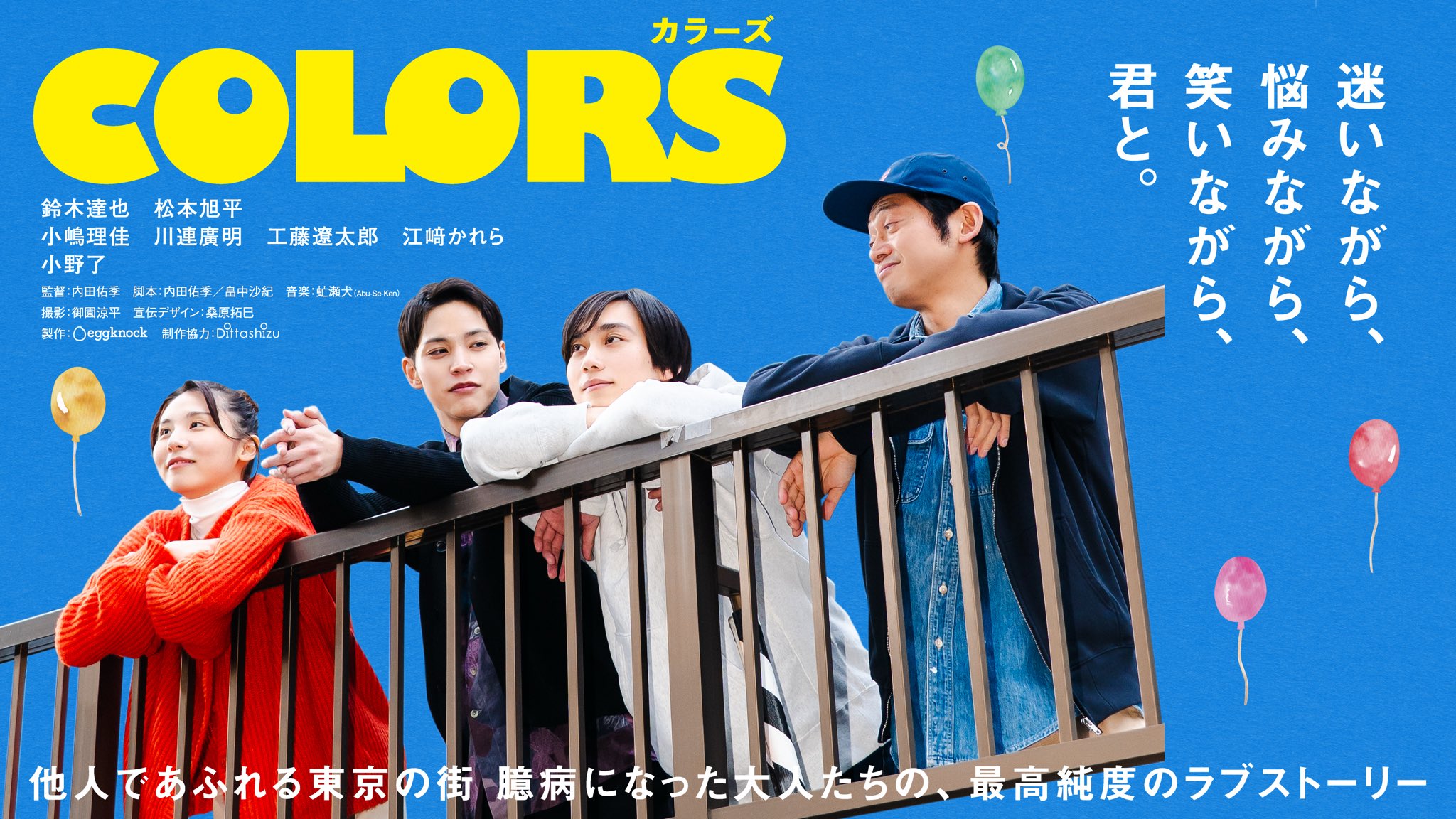
Nakamura Naomitsu, a freelance video editor, who's both shy and sincere, spends his days together with his close friends Anna (who's a freelance writer/screenwriter) and videographer Yoshiaki with whom he shares an office.
His only source of anxiety in his life recently has been his client, director Igarashi, whom he had never met before. His arrogant behavior over e-mail correspondence drives him insane.
Then comes his 30th birthday. Pushed by his friend's Anna's words and emboldened by alcohol, he signs up for a gay dating app and arranges to meet a guy named Souta. The same evening, the two meet and share a kiss, Naomitsu's first-ever kiss. However, the combo of nerves and alcohol causes him to vomit on the spot, and the evening comes to a disastrous close.
The next day, the director Igarashi is finally scheduled to come say hello in person. The man who appears before him is none other than Souta, the guy he kissed the day before.
Quick navigation
Subbed trailer:
From the studio behind Second Blue comes another BL! Be sure to support the drama officially by watching through nekocap links (the timing may be a bit off compared to the hardsub version, but it's still pretty good) or watching it directly on YouTube with more official subs.
Episode 1
Episode 2
Episode 3
Episode 4
Episode 5
Episode 6
Episode 7
Episode 8
Episode 9
Episode 10
Episode 11
Translation notes
Episode 2
I was mulling over how to translate カメラマン (cameraman) since it's quite an ambiguous word in Japanese. I went with cinematographer in the synopsis, but I think videographer makes more sense in the context of corporate PVs and CMs. I think it's a good word to describe someone who's responsible for everything when it comes to low-scale productions.
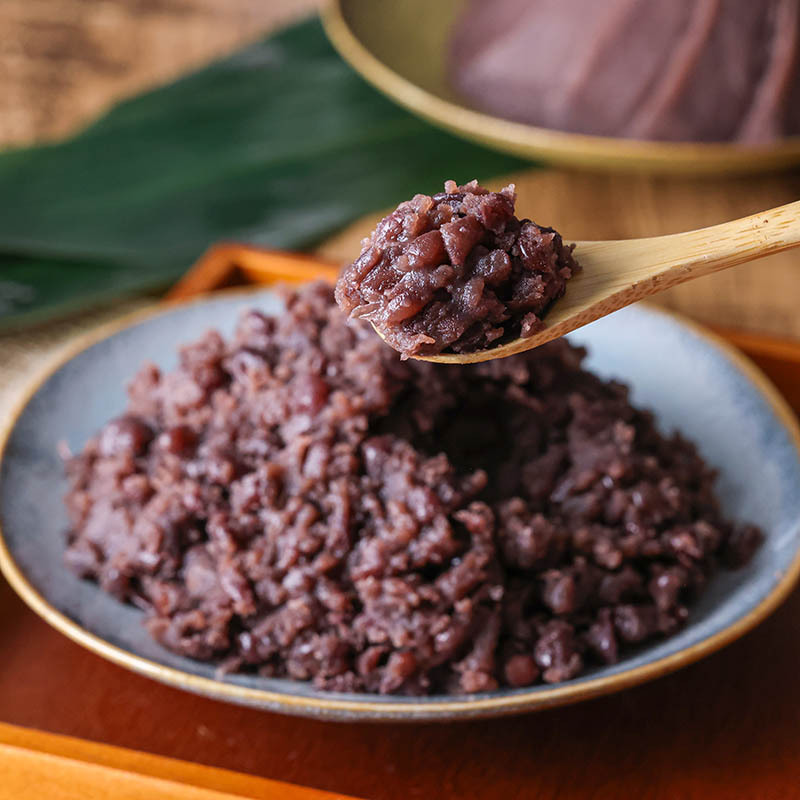
What Naomitsu doesn't like is 粒あん (tsubuan, or written 粒餡), a type of anko (sweet red bean paste). But tsubuan is a coarse variant with chunks of beans together with sugar (optional). You even avoid breaking the skins as much as possible.
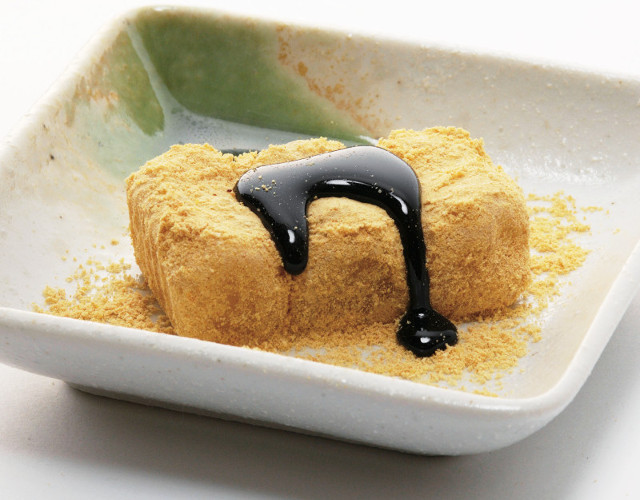
Souta's favorite foods are shingen mochi and karaage.
Karaage - a cooking method of deep-frying food (usually chicken, other meat, fish, seafood, etc.)
shingen mochi (信玄餅) - traditional wagashi from Yamanashi Prefecture, a type of rice cake eaten with dark sugar syrup, associated with Kinseiken (a famous confectionery producer) and named after the warlord Takeda Shingen
Episode 4
1:15 timestamp
Anna uses entertainment industry jargon here バーター (baataa - barter). It's often used to describe someone who's less popular being bundled together with someone more popular, especially in talent agencies (juniors being a package deal with seniors).
3:55 timestamp
The café's name is "Café Entr'acte" - If you're curious about what entr'acte is, it's a pause between sections of a play. Usually you'd see this translated as an interlude, but entr'acte implies a short performance between parts of a play (as far as I know, it's usually associated with special musical pieces in operas).
6:53 timestamp
Souta's "Is that because you prefer older guys? Or straight guys?"
These actually use very popular slang in gay circles - オジ専 (oji-sen, from oyaji-sen which is also used, oyaji=old man) and ノンケ専 (nonke-sen, nonke=straight). As you can tell, there's loads more of these you can form with "sen" which states your exclusive preference for something. For example, oke-sen is used for preference of silver daddies - men who are close to death.
Episode 5
1:18 timestamp
"For someone who does creative work, your level of understanding is low." - this is actually a play on the word 解像度 (kaizoudo). This word means resolution, but also figuratively the degree of understanding something or someone, hence why Naomitsu comes back with the 4K line.
5:07 timestamp
"Yagi-san, you're doing on-site research today, right?" - she uses the word シナハン (shinahan), which is a shortened form of scenario hunting. You might think it's actually scouting the locations, but it's different from location scouting ロケハン (rokehan, from location hunting) which is used for that. Scenario hunting is actual on-site interviews with people, and trying to construct the story as realistically as possible by making use of the people present. In a way, it's a form of research, so I translated it like that.
Episode 6
This episode was fairly straight-forward, so I don't have much to comment on apart the title.
The title is an oxymoron of a sort. It pits two words 不純 (fujun) and 純情 (junjou). Fujun is used to describe impure things, and it's often associated with physical impurity in terms of carnal relationships (preference of sex). Junjou stands for pure heart, naivety, and innocence. So it's basically a contrast of Anna's feelings - her innocent feelings for Yagi-san getting polluted by the sexual relations
Episode 7
ReFa is a Japanese brand that specializes in beauty products. They even have a collection that focuses on heart-shaped products. However, in the drama, they pronounce it as refa (レファ), not the usual rifa (リファ) which is used for the brand (to not be associated with the brand).
About Mui no Souen (無為の蒼炎): This could be translated as "Blue Flames of Idleness", but I have no context for it, so I kept it romanized.
In entertainment industry, producer is usually refered to as "P".
Not sure where the info about Marv's age came from, so I just kept it more vague since I can't find any mention of him being 35 in the movie.
"Friday Movie Night programme" - I wasn't sure how to translate this well, but Kinyou Road Show (Friday Road Show - "road show" is used for premieres) is an NTV programme slot which broadcasts foreign and also domestic movies. This is an extremely popular slot which has been around since 1985. "Home Alone" is often rebroadcast on this slot as well.
Episode 11
Yebisu is Yebisu Garden Cinema, a cinema located in Shinjuku that offers a variety of foreign films which they both love.
Comments